Fire
Exploring aerial observation and early-warning applications to help teams understand a developing incident.

More awareness.
Better decisions. A coordinated response.
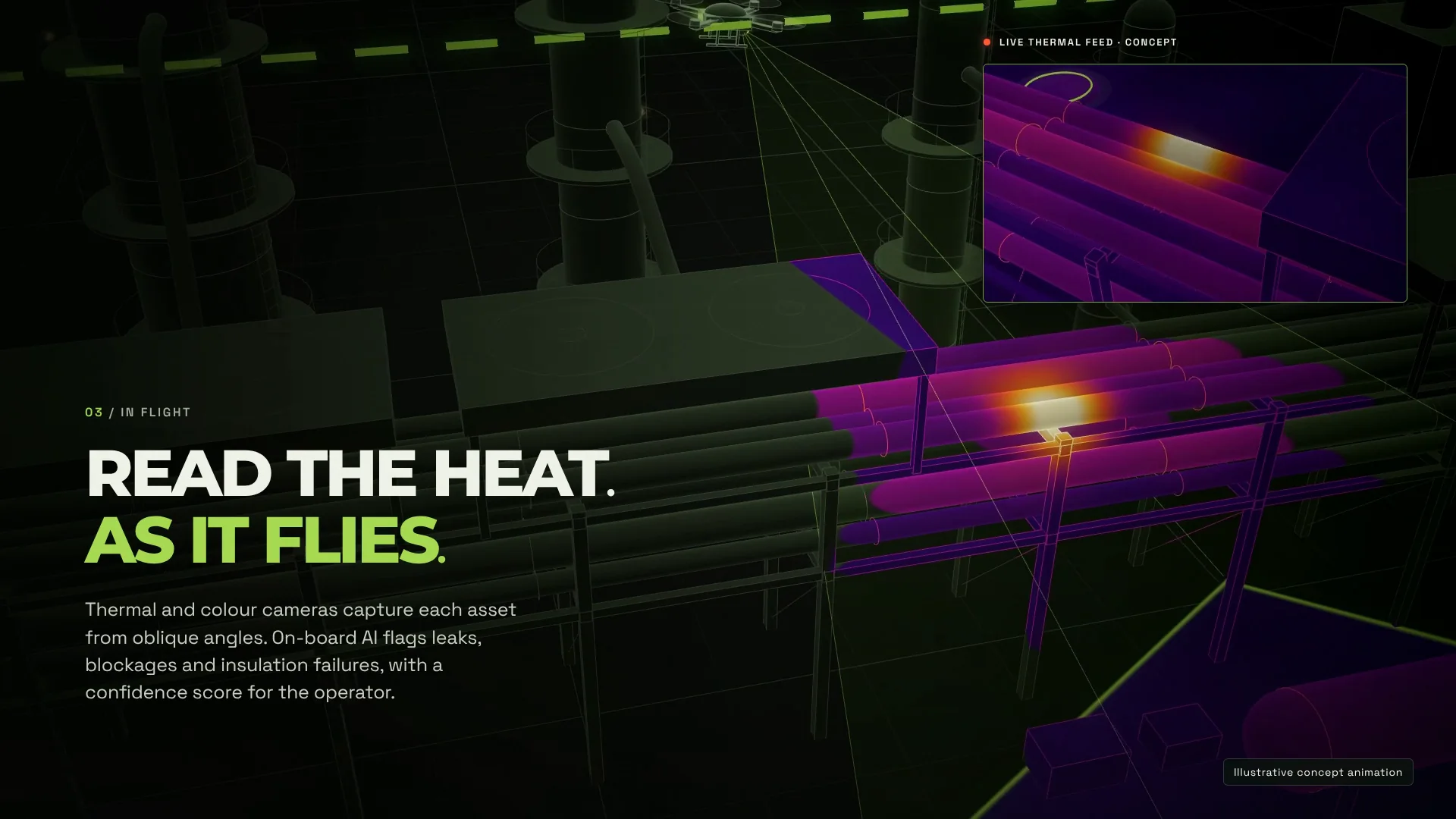
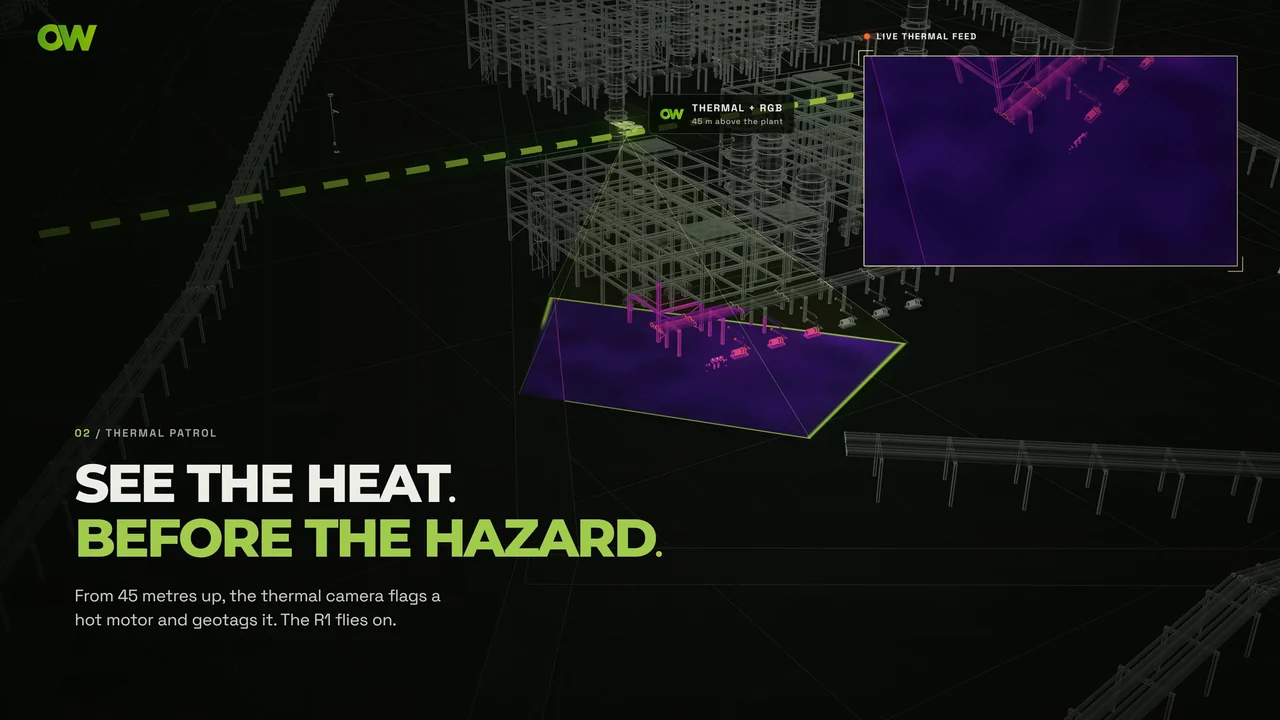
Follow an illustrative drone patrol from launch to thermal observation, a closer look by a ground robot and a shared site plan.
Illustrative industrial-safety concept. Proposed capabilities are untested; this is not a deployed system.
Original film · Case studyFollow an illustrative drone patrol from launch to thermal observation, a closer look by a ground robot and a shared site plan.
Exploring aerial observation and early-warning applications to help teams understand a developing incident.
Research into navigation, obstacle avoidance and decisions in places that are difficult to access.
Cooperating drones that map an unfamiliar environment, share tasks and support the delivery of aid.
Real drones. Robotics. The space where ideas become experiments.
Step into the robotics and AI laboratories at City St George’s, University of London, in our short film.
01:09 / LAB FILM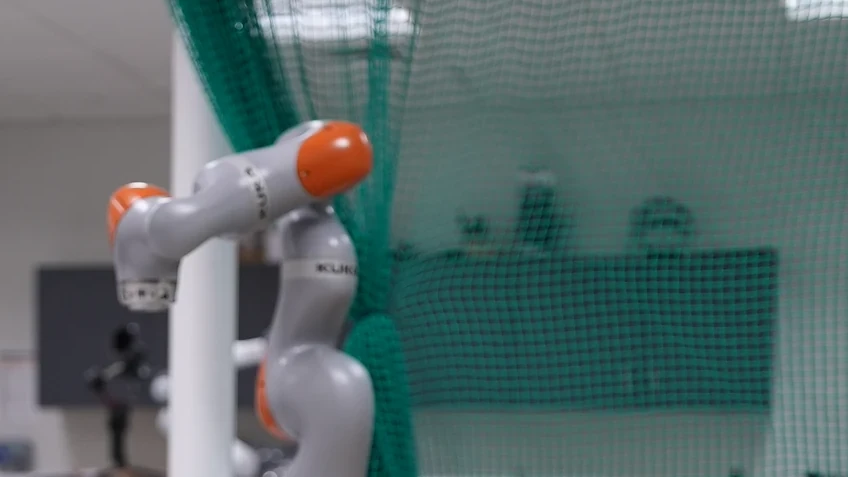
An energy-site concept bringing aerial observation, ground robotics and acoustic sensing into one proposed approach.
3:31 · Concept film with stock footage and simulation. The response sequence at 2:01–3:12 is simulated; the film does not demonstrate validated OW capabilities.
At City’s 2024 search-and-rescue competition, the university team’s two drones turned research into a winning real-world demonstration.
Our team’s research experience includes SAPIENCE: autonomous navigation and cooperation in a simulated disaster environment, without GPS.
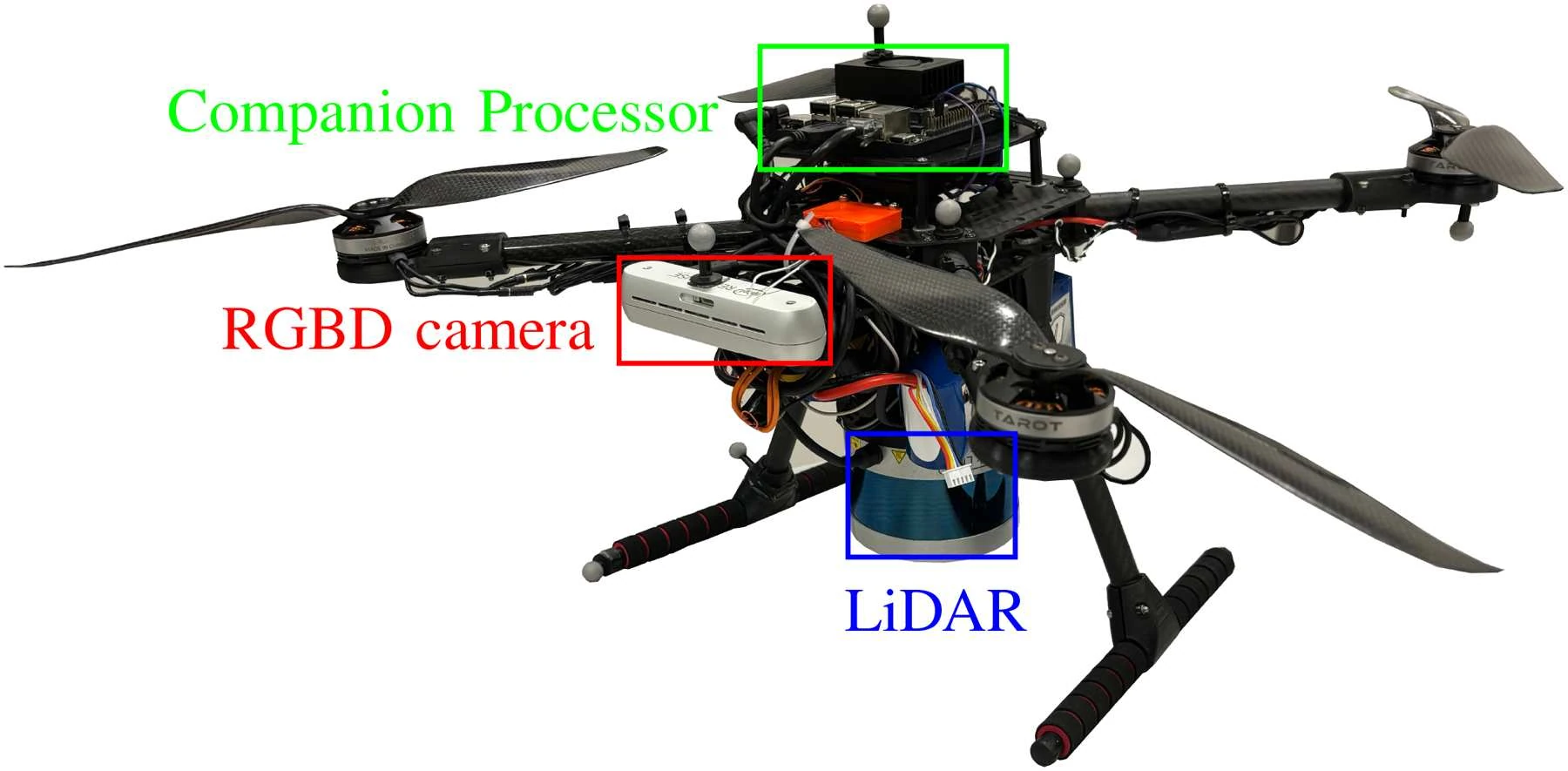
Two physical drones combine deep reinforcement learning, shared task allocation and LiDAR-based navigation to map an indoor disaster scenario and coordinate delivery tasks without satellite positioning. The study documents City’s first-place result at the 2024 NATO SAPIENCE competition.
The funding supported the four-university programme. The competition result belongs to City’s research team and is separate from OW product validation.
Scroll through the methods behind cooperative search and rescue. Two drones, one shared mission.
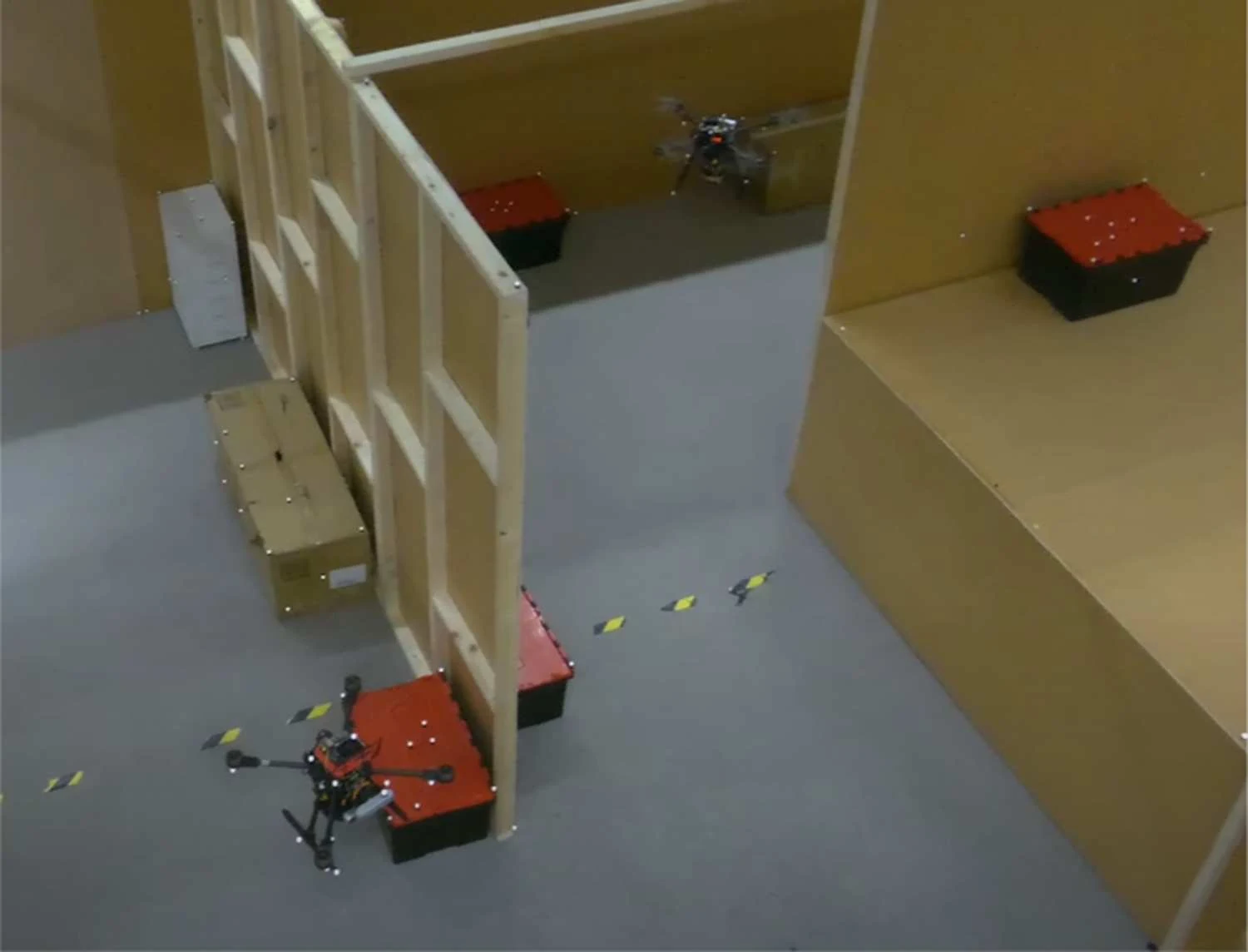
Follow two research drones as they sense an indoor environment, navigate around obstacles and work towards a shared mission.
Simplified illustration of published SAPIENCE methods, not a recorded flight or validation of OW products.
Original explorer · Case studyFollow two research drones as they sense an indoor environment, navigate around obstacles and work towards a shared mission.
Our photographed prototype, the electronics inside it and the digital assembly. A closer look at the technology we are developing.
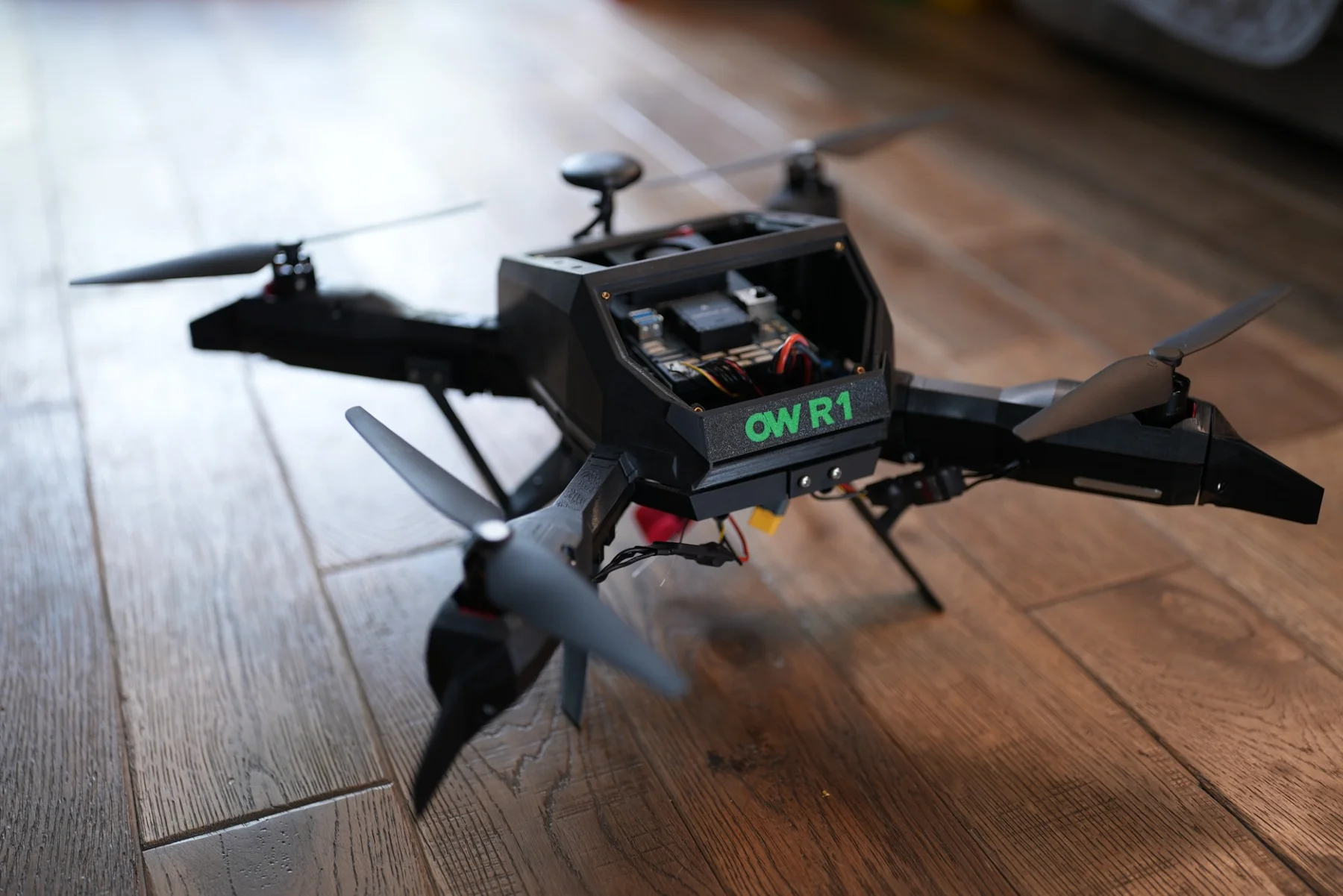
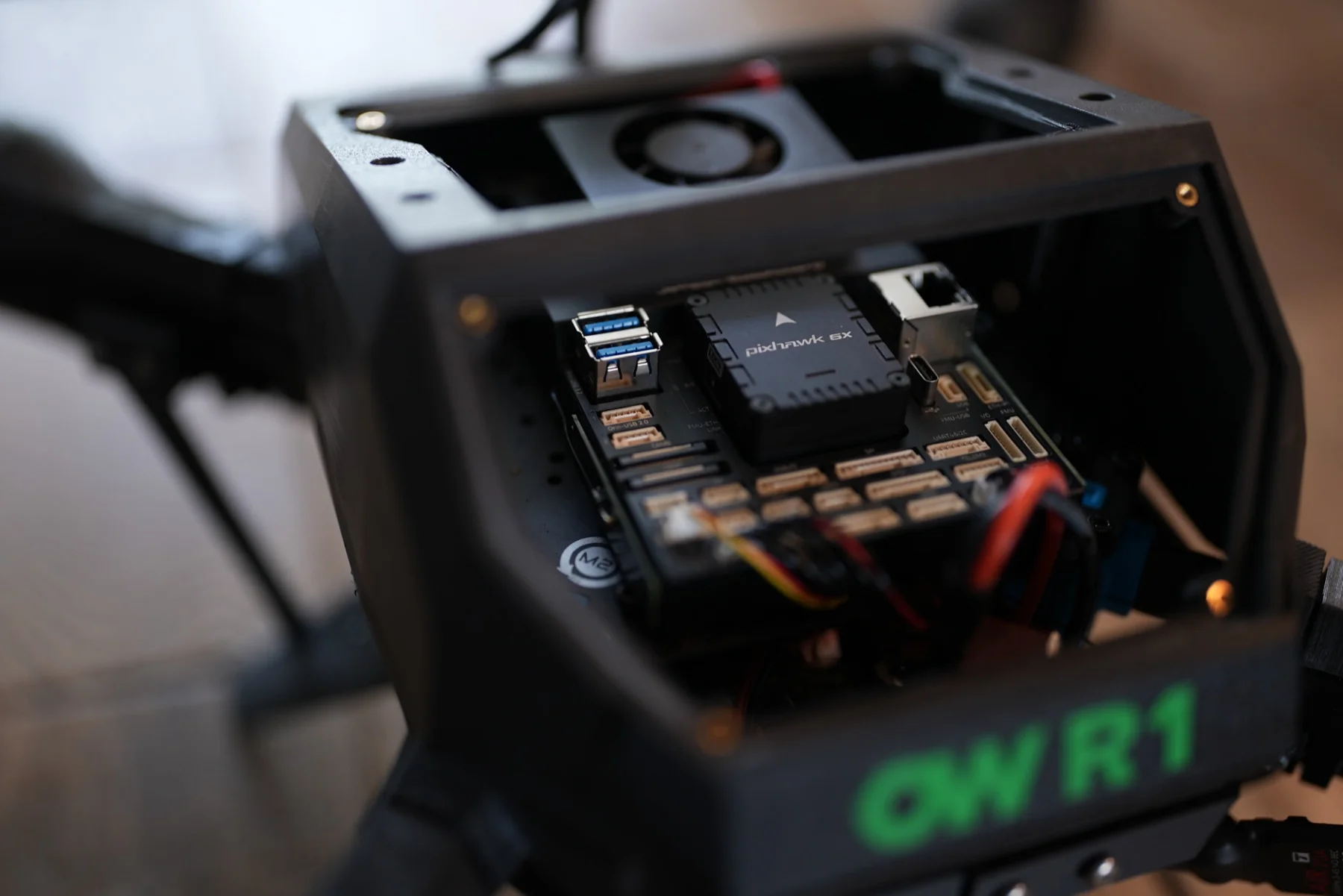
Rotate the digital assembly. Switch between open and closed views.
Original hardware photography. The Faraday Cage concept and digital assembly remain in development; published research results are not product specifications.
Watch a UAV trajectory develop through a dense obstacle field in the S³F navigation simulation.
00:29 / RESEARCH SIMULATIONExplore the navigation project ↗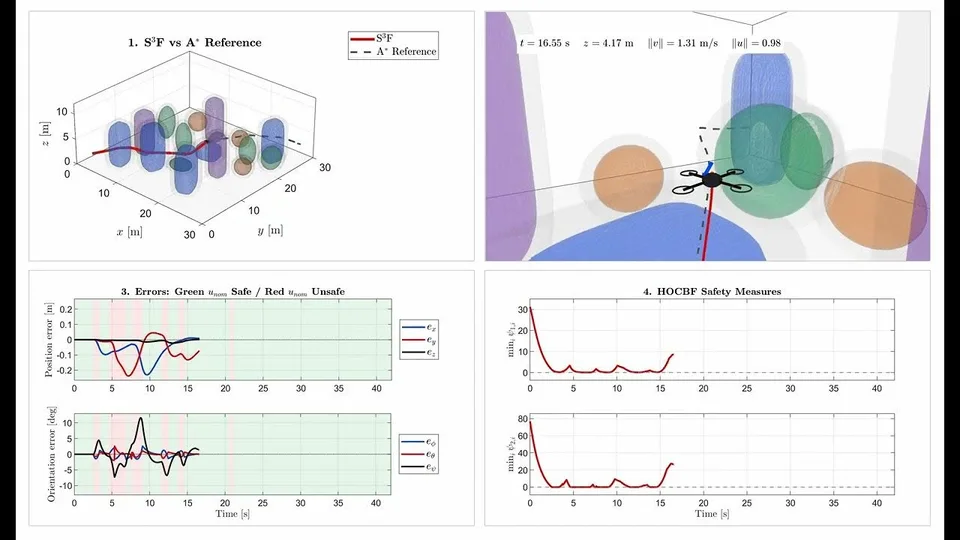
Laboratory work and academic connections underpin a wider programme of robotics, control and autonomous-systems research.
Our team’s work at City connects robotics, autonomous flight and laboratory testing. OW has supplied a drone to the university; the laboratories are university-owned, with project access arranged.
Explore the robotics facilities ↗Our team includes an MIT research affiliate, with research connections to the Mechatronics Research Laboratory. An academic reference from an MIT professor is available on request.
Request an academic reference ↗Planetary robotics. Explainable AI. Robust control. Explore the papers behind the experience.
A review of methods that make learned decisions easier to understand, covering applications in navigation, control and robotics.
Read the paper ↗Research into verifying neural-network controllers against uncertainty, developed through the ESA-supported AITIVE-GNC programme.
Read the paper ↗The PRO-ACT programme brings different robots together for lunar assembly and construction research, with shared software, hardware and experimental test environments.
Read the paper ↗A method for solving nonlinear leader–follower optimisation problems, studied through mathematical analysis and numerical experiments. This work is available as a preprint.
Read the preprint ↗Earlier City projects include Dstl-funded research into explainable AI and adversarial learning, ESA guidance and navigation work, and PRO-ACT planetary robotics.
A simulation of robots assigning and reassigning tasks as conditions change, accounting for deadlines, battery levels and task grouping. Physical experimental validation remains a next step.
Watch the task-allocation demonstration ↗Discuss the application, research stage and operating environment with us. OW drones remain in development; fire and rescue use requires project-specific testing. Academic experiments and simulations are not validated OW product specifications.
Let’s build what comes next.